
The Experienced Reader
Bolaño's Relationship to the US Literary Tradition

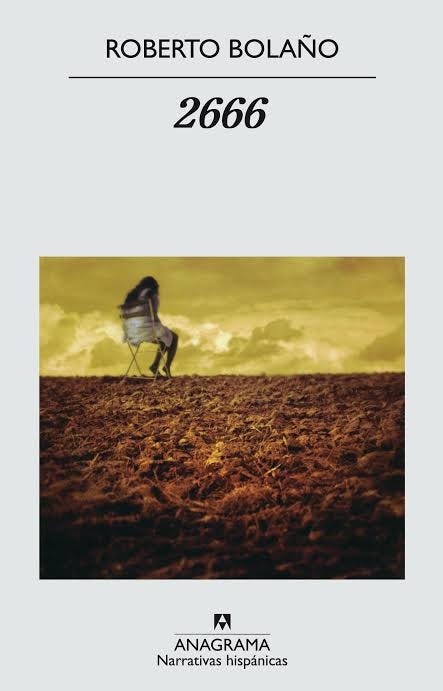
This is the last installment of my summer series of pre-pub excerpts from my 2018 book Anxieties of Experience. For the final week, I decided to return to the writer I started with, who is in many ways the key figure in the book: Roberto Bolaño. In this section, I discuss Bolaño’s relationship to the US literary tradition, particularly to the African American writers that he drew upon in writing “The Part of Fate” in 2666. Thanks to all those who have followed the series this summer. I’ll be back with some new material later this month.
Merging the Reader and Experiencer
Roberto Bolaño’s self-fashioning undoubtedly participates in the strategies of engaged reading common to many Latin American writers of the 1980s and 1990s. Indeed, reading is the main activity through which Bolaño’s characters understand the historical, political, and social contexts in which they live and write. In the foreword to Distant Star, the first of an extraordinary series of fictional works that Bolaño produced from 1996 until his death in 2003, the narrator announces this readerly strategy with a reference to Borges’s urtext, “Pierre Menard, Author of the Quijote.” After defining his role as “preparing drinks” and “consulting a few books,” the narrator invokes the “increasingly lively ghost of Pierre Menard” to testify to “the validity of reusing many paragraphs.” Ostensibly justifying the novel’s cannibalization of Bolaño’s earlier Nazi Literature in the Americas, the line also hints at the late twentieth-century resurgence of the Borgesian practice of fictionalizing history through textual rewriting, a practice that, along with Menard’s ghost, grows more and more apparent every day [cada día más vivo]. In works of the late 1990s such as Distant Star, The Savage Detectives, and the short story “Sensini,” Bolaño draws on Piglia’s formula for mapping the history of the dictatorship and postdictatorial periods through a reading of literary tradition. The analogy between the reader and the detective governs the narrative logic of Distant Star, where the semiautobiographical protagonist Arturo Belano finds the poet-assassin Carlos Wieder largely by reading forgotten literary reviews.
Unlike Piglia and the other writer-readers of the 1980s and 1990s, however, Bolaño reinvests the category of experience with significance by exploring primarily the continuities, rather than the gaps, between life and literature. The frenetic routines of the visceral realists in The Savage Detectives, who spend equally inordinate amounts of time reading, drinking, traveling, and—in the young García Madero’s words—cogiendo, are only the most obvious examples of the Bolañian character for whom literature is a spur to experience, and experience a spur to literature. In one of his more programmatic affirmations in 2003, Bolaño insisted: “I write from experience, my own personal experience, that is, as well as my bookish or cultural experience, which over time have merged [se han fundido] into a single thing.” And he ends one of his final essays, “Literatura + enfermedad = enfermedad,” with an insight supposedly gleaned from Kafka: “journeys, sex, and books are all paths that don’t lead anywhere, but they are paths along which you must travel and get lost, to find yourself, or to find something: a book, a gesture, an object you lost; to find whatever it is, maybe a method.” This essay, originally delivered as a lecture in Barcelona less than a year before Bolaño’s death, when he was frantically finishing his twelve-hundred-page novel 2666, can be seen as a kind of final manifesto in which his literary “method” is defined as a blend of two experiential modes (travel and sex) with the activity of reading. Just as importantly, Bolaño developed his method for merging the discourses of reading and experience in part by staging a series of fictional (mis)encounters between US and Latin American characters.
The most archetypal confrontation between a US experiencer and a Latin American reader in Bolaño’s oeuvre appears in the middle section of The Savage Detectives. Amid the polyphony of voices that recreate Belano’s and Ulises Lima’s itineraries in the Mexico City of the 1970s, the narratives of the Mexican poet Manuel Maples Arce and the American expatriate Barbara Patterson mark a clear contrapuntal movement. Placed in consecutive order in the text, the two narrative segments repeatedly play off one another, offering a sustained cross-cultural contrast.52 To the aging avant-garde poet Maples Arces, Patterson comes off as the typical antiliterary gringa: “The American looked me in the eyes and nodded. I doubt she knew Borges well. I doubt she knew my work at all, even though I was translated by John Dos Passos. In fact, I doubt she knew much about John Dos Passos.” To the exhuberant, profanity-prone Patterson, Maples Arce comes off as the typical Mexican intellectual, one of the “old fuckers festering in their memories and literary quotations,” an irredeemable letrado:
That mother-fucking hemorrhoid-sucking old man, from the beginning I saw the bad faith in those beady, bored little monkey eyes, and I said to myself this bastard will take any chance he can get to spit on me, the son of a whore. But I’m stupid, I’ve always been stupid and naïve and I let down my guard. And then it happened—what always happens. Borges. John Dos Passos. Vomit casually smattered on Barbara Patterson’s hair. And on top of all this the fucker looked at me with pity, as though he were thinking these guys brought me this pale-eyed gringa just so I could shit all over her, and Rafael also looked at me and that midget asshole didn’t even budge, like he was already used to every fart-stinking old man insulting me, every constipated old man of Mexican letters.
Here, as in Prisión perpetua, the narrative conflict arises from a clash between a US experiencer and a Latin American reader. Yet if the first passage tempts us to side with Maples Arce in his dismissal of Patterson, her words force us to reinterpret the entire scene in light of her invective against the violence, sexism, and conservatism of his letrado discourse. And in fact, though Maples Arce and the rest of the estridentistas elicit a certain respect from Belano and Ulises Lima as alternatives to the literary world dominated by Paz, Patterson’s critique of the traditional letrado also becomes a recurring theme of the novel. It anticipates the visceral realists’ search for Cesárea Tinajera as the most liminal participant in the estridentista movement (and the only woman associated with it), as well as their decision to detach themselves permanently from Latin America’s oldest lettered city, replete with old men (and young ones too) “constipated” by Mexican literature. Patterson’s critique of the letrado tradition, in other words, gets incorporated into the very raison d’être of the novel’s protagonists.
The Savage Detectives’s return to the Mexican avant-garde scene of the 1970s must thus be considered, among other things, as a means of reconciling the cultural practices of the Latin American literature of the reader and the US literature of experience. It is well known that the manifesto announcing the formation of infrarrealism, the real-life counterpart to the visceral realist movement in the book, takes its cue from Kerouac’s On the Road in encouraging the group’s poets to “[l]aunch themselves on the roads to discover something new.” In fact, the desire to assimilate the aesthetic of the Beats—in Piglia’s mind, the last generation to hold a commitment to “pure experience”—remained a part of Bolaño’s project until well into the 1990s. In a 1998 interview that coincided with the publication of The Savage Detectives, Bolaño recalled, “The voyage [el viaje], in my generation’s imaginary, was the voyage of the Beatniks. And that remained the case for many years after, even when I traveled through Europe.” This does not mean, of course, that Bolaño was unaware of the cultural and historical distance that separated the Beat generation from his own—in a 2003 conversation, he playfully claimed: “I don’t want to become the Jack Kerouac of the Third World.” Instead, his interest resides in how cultural discourses originating in the United States were translated, adapted, and repurposed in the Latin American literary field.
In this sense, the US literature of experience provided a specific literary strategy for Bolaño to convert his personal trajectory into literary form. This strategy can be seen most clearly in Bolaño’s reworking of the most important “experience” in his life (and his writing career): his firsthand witnessing of the Chilean military coup of September 1973. Bolaño’s repeated evocations of this harrowing ordeal, refracted in Distant Star, The Savage Detectives, and Amuleto [Amulet, 1999] through the character of Arturo Belano, present the incident not only as the primal scene of trauma but also as the starting point for an epic odyssey. It is true, as a number of critics have argued, that Bolaño’s work obsessively probes the geographical, physical, and emotional wounds of the violent Latin American military dictatorships of the 1970s and 1980s.
Yet unlike many postdictatorial works that dwell on the lingering effects of trauma and the denunciation of the crimes of the past, the majority of Bolaño’s characters peer into the abyss with eyes wide open, pressing forward for better angles and even deeper stimulation. In a controversial essay on literature and exile, Bolaño lambasted the “sad song of exiles . . . intoned by Latin Americans and also by writers from other impoverished or traumatized zones [who] insist on nostalgia and a return to their country of birth.” And in a 2002 conversation with the Spanish critic Ignacio Echevarría, after voicing his general admiration for Piglia, Bolaño distanced himself from the Benjaminian trope of the exhaustion of experience woven throughout Artificial Respiration and Prisión perpetua. Alluding to the affirmation in Prisión perpetua that “[t]he modern novel is a carceral novel. It narrates the end of experience,” Bolaño says, “what I can’t subscribe to in Piglia’s work . . . is the idea that literature, or the novel, or narration, is a prison, the most faithful reflection of the prison.”59 In his essays and novels, Bolaño appropriated the tropes of the US literature of experience to counter the narrative of the exhaustion of experience in Piglia and other postdictatorial Latin American writers of the 1980s and 1990s. As Bolaño stressed the aesthetic and political value of moving on, his fiction systematically transmuted stories of trauma into travel narratives.
The intertwined discourses of reading and experience find their deepest articulation in 2666. The novel brings together Latin American writers who use their bookish backgrounds to make sense of the world beyond the lettered city and US writers who rethink their reliance on experience in the context of a political tragedy that requires a turn to the historical archive. The five parts of the sprawling novel revolve around the violent murder of hundreds of women in the US-Mexican border town of Santa Teresa, a fictionalized version of Ciudad Juárez described in the novel as a “black hole” whose centripetal force sucks in even the most distant people and events. 2666 also dramatizes the struggle of writers, critics, journalists, intellectuals, and detectives—those whose very livelihood hinges on the principles of hermeneutic understanding—to find an interpretive framework that can account for the scale and scope of the crimes.
If, as Ignacio Echeverría has suggested, the basic figure in Bolaño’s work is the poet, the first parts of 2666 diverge from this model in centering on professionalized readers who are torn from their institutional landscapes and forced to use their literary training to decode a reality that impinges on and then overwhelms the books, reviews, and cultural establishments that form their readerly habits. Though the material for much of the book did not come from Bolaño’s experience, the passage from reading to experience clearly delineates the narrative arc of nearly all of the parts of 2666. This structural element is reinforced by the first and last lines of the novel, which lead inexorably—and, over the course of nearly twelve hundred pages, almost interminably—from a scene of reading (“The first time that Jean-Claude Pelletier read Benno von Archimboldi”) to an experiential journey (“Soon afterward [Archimboldi] left the park and the following morning he left for Mexico”).60 The novel’s opening part, “The Part about the Critics,” narrates the winding trajectory of a group of four European comparative-literature professors who come together (and fall apart) over the reading of the German writer Benno von Archimboldi, ending up on a track not to tenure but to Santa Teresa, where they hope to locate Archimboldi but are instead faced with the brute violence of the femicides. The novel works almost like a Künstlerroman in reverse: life does not lead to art; rather, literary formation becomes life preparation. As an old writer tells Archimboldi toward the end of the novel: “I won’t tell you that experience can’t be obtained by continuous contact with a library, but experience will always be above and beyond the library.”
The most conspicuous example of the reader turned rebel in 2666 is Sergio González, the journalist for the Mexico City−based daily newspaper La Razón, who begins to investigate the femicides while on assignment for a human-interest story in Santa Teresa. To a certain degree, the character of González can be understood by analogy to the role of the detective as a reader of the social scene. Yet Bolaño literalizes the analogy in the case of González, since we learn early in “The Part about the Crimes” that he is actually—that is, professionally—a reader: “Normally he wouldn’t have accepted the job [of investigating a crime in Santa Teresa], because he wasn’t a police reporter but a journalist in the culture section. He reviewed philosophy books.” At the same time that the journey to Santa Teresa awakens González to the brutality of the femicides and the precarity of those living on the border, it also displaces him from the cultural establishment in Mexico City, where his writer friends “probably didn’t care a lot about what was happening in that distant corner of the country.”64 Just as significant as the textual presence of González the character is the fact that Sergio González Rodríguez was a real-life Mexican writer and journalist whose nonfiction book on the femicides, Huesos en el desierto [Bones in the Desert], was published in 2002. As Marcela Valdes has shown, Bolaño read the manuscript version of the book shortly before its publication, and whole passages in “The Part about the Crimes” are lifted nearly verbatim from González Rodríguez’s book. Bolaño’s inclusion of González Rodríguez in the novel was more than just homage. Since Bolaño himself never traveled to the north of Mexico, in 2666 González supplants the semiautobiographical Belaño as the representative reader-experiencer: both a voracious consumer of books and an important metatextual intermediary between the Spain-bound novelist and the on-the-ground events on the US-Mexico border.
“The Part about Fate,” the third part of 2666, is Bolaño’s most sustained attempt to work through the conventions of the US literature of experience. This part focuses on Oscar Fate, a reporter for the African American magazine Amanecer Negro who arrives in Santa Teresa to cover a boxing match, only to become embroiled in a series of misadventures seemingly connected to both the femicides and the city’s drug cartels. In the house of a rich businessman, Fate vaguely senses that a young student, Rosa, risks becoming the next victim. The second half of “The Part about Fate” tracks Fate’s and Rosa’s paths through Santa Teresa as they flee from their pursuers while simultaneously trying to untangle the logic of the violence that has suddenly ensnared them. During the period when he wrote 2666, Bolaño was reading the works of the African American detective novelist Walter Mosley, and I would argue that the narrative motor of the “The Part about Fate” comes from absorbing, at least temporarily, the codes and language of Mosley’s version of the US literature of experience. In a review of the Spanish translation of Mosley’s Gone Fishing [De pesca, 1997], published in 1999, Bolaño analyzes the narrative world of Easy Rawlings, the protagonist in Mosley’s mystery novels:
Because Easy Rawlings is not really a detective but just an intelligent guy who occasionally solves problems, searches for missing persons, and tries to settle little disputes that inevitably turn into life-or-death matters after a few pages. The problems get so big that they become unmanageable, the machine of reality starts working [la máquina de la realidad se pone en funcionamiento] and everything leads the reader to believe that Easy won’t come out alive, among other things because he is black and poor and has no political or religious power behind him, a guy who has nothing going for him except a bit of physical strength and a large dose of intelligence. But Easy always survives the dead ends into which Moseley puts him.
Bolaño’s description of the “machine of reality” in Mosley’s novels bears a striking resemblance to the machinery of violence in Santa Teresa that slowly engulfs Fate, turning his journalistic assignment into an existential encounter with what Bolaño elsewhere dubs the “secret of evil.”
But if “The Part about Fate” opens with a concentrated effort, as Bolaño puts it, to stick to “the observation of life and experience,” this hard-boiled narrative mode is interrupted in the middle. Right before he arrives in Santa Teresa, Fate travels to Detroit to write an article on Barry Seaman—a fictional version of one of the real-life founders of the Black Panthers, Bobby Seale. Fate’s interview with Seaman, which recalls Belano and Ulises Lima’s brief conversation with Cesárea Tinajero in The Savage Detectives, functions similarly as an exploration of a marginalized cultural tradition—in this case with the legacy of radical African American thought. Yet where one might expect that Seaman’s discourse would center on the “black experience” of the post−Jim Crow era in the United States, he focuses instead on a different message. In a talk in a small church in Detroit witnessed by Fate, Seaman speaks to the all-black audience about the importance of reading, a practice he developed while serving a prison sentence:
What I’ll say to you is that you have to read books. . . . And all of you who are so nice will probably be asking yourselves: what did Barry read? I read everything. But more than anything else I remember a book I read in one of my most desperate moments that restored my tranquility. What book was that? . . . That book was called The Selected Compendium of the Works of Voltaire and I will tell you that it’s very useful or at least was of great use to me.67
Though Seaman imparts these words in a playful tone, his views on literature and reading echo Bolaño’s own authorial discourse in his essays and interviews. Seaman reiterates Bolaño’s defense of omnivorous reading (“I read everything”) and, in his seemingly random reference to Voltaire’s compendium, uses almost the exact same phrase that Bolaño did in his last interview when underscoring the kind of audacious reader he admired: “I’m moved by no-nonsense readers, those who still dare to read Voltaire’s Philosophical Dictionary, which is one of the clearest and most modern books I know.”68
The full scope of Seaman’s message remains incomplete, however, until we parse the passage’s implicit engagement with the black radical archive. As we might recall, in his essay on Burroughs, Bolaño remarks that “When he talks about his readings one has the sense that he was remembering vague periods of his life in jail.” In the Beat literary tradition, the American prison system often appears as the one place where reading temporarily substitutes for experience, a pause between adventures not unlike the university in its logic of confinement. Seaman’s emphasis on the importance of his prison reading to his identity formation, however, points to an alternative strain of US literature, a black intellectual tradition that encompasses Malcolm X, George Jackson, and Chester Himes (Bolaño makes reference to Himes’s prison novel, Yesterday You Will Make Me Cry, in Between Parentheses). Jackson, for instance, became a vital voice of the Black Panthers without ever leaving San Quentin Prison, interspersing his political and social writings with readings of Marx, Lenin, and Gramsci. Thus, when Seaman advises his audience: “Read books by black (male) authors. And by black (female) authors [autoras negras]. But don’t just stop there,”69 he is both proposing a politics of voracious reading and drawing from a tradition of radical black intellectuals who advocated reading beyond the black experience.
Seen in this light, Seaman’s “sermon” on reading prefigures Fate’s interrogation of the logic of identity politics after his arrival in Mexico. After identifying as “American” [Soy americano] to a Mexican cashier, Fate muses about his motives for defining himself by nationality rather than race: “Why didn’t I say African American. Because I’m outside of the country? . . . Does that mean that in some places I am American and in other places African American and in other places, by the sheer force of logic, that I am no one?” Beginning to view his identity as situational rather than fixed, Fate finds a new purpose in his journey to Santa Teresa. Although he had initially come to cover the fight because a black boxer was involved, he gradually realizes that the femicides are the more urgent story: they speak to the broader cycle of violence, economics, and displacement into which Fate himself has been drawn. When Fate proposes a “great story” about the murders to his editor at Amanecer Negro, the following argument ensues:
—Oscar—the section editor said to him—you are there to cover a fucking boxing match.
This is better—said Fate—the fight is an anecdote, what I’m pitching you is much more.
—What are you pitching me?
—A portrait of industrial conditions in the Third World—said Fate—an aide-mémoire of the current situation in Mexico, a panorama of the border, a mystery drama of the first order, for fuck’s sake.
Fate’s editor responds by defending the putative autonomy of the black American experience—“How many fucking brothers are involved?” [“¿Cuántos putos hermanos están metidos en el asunto?”, 373]—but Fate’s curiosity demands that he continue to unravel the many loose ends of the Santa Teresa crimes. This scene takes on added significance when we recognize that the story Fate proposes to his editor resembles the story Bolaño himself will write: a border mystery set in contemporary Mexico that addresses the global (post)industrial conditions of the twenty-first century. The question Fate’s editor puts to him thus becomes a question for the author behind 2666: why write about something you don’t know, something beyond the scope of your own experience? The answer is one that, as I have suggested, Bolaño articulates in 2666 and beyond: a politics and a praxis of voracious reading that is formulated not only on the various narrative levels of the text but also in the book’s paratexts: the essays, interviews, and authorial statements that Bolaño disseminated in the years spanning the novel’s composition. Moreover, it is a politics inherent to Bolaño’s praxis, that is, his method of gathering source material to write a novel set in multiple places he had never been.
Bolaño’s combination of this politics of voracious reading and a renewed discourse of experience came to define an important position in Spanish-language literature of the early part of this century. With the posthumous publication of 2666 in Spanish in 2004, Bolaño became the most important literary model for Latin American writers. His attempt to merge the positions of the reader and experiencer has rapidly become the cultural dominant in the Spanish-speaking world: characters like Belano and Fate who embark on experiential journeys in search of literary precursors now populate the fiction of authors from Mexico to Argentina. Though there is a growing wariness among more established writers about a perceived proliferation of Bolaño acolytes (what the Chilean writer Alberto Fuguet wryly refers to as the rise of the “Bolañitos”), some of the most compelling novels of the first decade of the twenty-first century worked from a Bolañian paradigm to explore the imbrication of literature, history, politics, and daily life. The Mexican writer Juan Villoro’s El testigo (2004), for example, interrogates Mexican political history in the wake of the PAN’s historic 2000 victory by returning to the works of early twentieth-century poet Ramón Lopéz Velarde. Commenting on the book’s relationship to 2666, Villoro has said: “I am interested . . . in the moment when the researcher no longer interprets only texts and books, in how they take him to other experiences and places in life.”72 Here we detect the central principle of Bolaño’s work: that reading should enhance one’s ability to interpret the world and its contemporary social formations.
Really great stuff.
This is a rich piece; thank you for it! One thing I'd add, coming at Bolaño from translation studies rather than comparative lit: the reader/experiencer merge you're tracing has a linguistic double that the essay leaves implicit. Fate doesn't just cross from reading into experience when he lands in Santa Teresa; he crosses from English into Spanish, and his "American" identity has to renegotiate itself in a language that doesn't carry the same racial taxonomy ("Why didn't I say African American"). That's not incidental to the identity question you quote, it's partly produced by the move between languages. Spanish doesn't hand him the category he's used to reaching for, so the category itself becomes visible as a category, rather than a given.
And there's a second, quieter translation happening at the level of Bolaño's own method: he's absorbing Mosley's hardboiled English idiom and metabolizing it into his Spanish prose, which we then read back in English translation in 2666. So "The Part About Fate" is a reader-experiencer merge happening simultaneously in two languages and two literary traditions. The "machine of reality" you cite from his Mosley review is already a piece of translated hard-boiled diction before it becomes Bolaño's own idiom. I'd argue the politics of voracious reading you describe is inseparable from a politics of voracious translating: reading across languages, not just across national literatures, is part of how Bolaño builds that continuity between books and life.